Special Issue on Knowledge Cumulation in Environmental Governance

By Michael Rose and Jens Newig

Over the past years, we’ve watched environmental governance research expand at impressive speed. New case studies, new concepts, new methods — the field is vibrant. Yet one question has kept nagging at us: Are we actually building knowledge, or are we sometimes also talking past each other?

This simple question ultimately motivated a group of scholars from the Earth System Governance taskforce on Knowledge Cumulation to work on a special issues, which is now published with Environmental Policy and Governance.

Environmental governance research is wonderfully diverse, but that diversity also makes it difficult to connect findings across contexts. Too often, insights remain isolated: a promising mechanism here, an interesting participatory process there — but without linking back to previous work, without clarifying whether what we’ve learned travels, under which conditions, and with what implications. If we want the field to mature — and to be genuinely useful for policymakers and practitioners — we need to become more deliberate about how we build on each other’s work.

The contributions in this issue take up this challenge from different angles. Some examine where cumulation is already happening (and where it isn’t). Others propose ways to measure or strengthen cumulation — through comparative designs, transparent data practices, systematic reviews, or conceptual clarification. Still others reflect critically on whether a stronger push for cumulation risks narrowing the field or crowding out diverse ways of knowing. Taken together, they open up a conversation we believe the field has long needed.

Our hope is that this special issue sparks more reflection — and more intentionality — in how we, as a research community, create knowledge that genuinely adds up. Not by forcing uniformity, but by building bridges: across cases, disciplines, methods, and perspectives. We as guest editors – Michael Rose, Jens Newig, Sina Leipold – invite you to explore the issue, engage with its arguments, and join the conversation on what cumulative knowledge in environmental governance could and should look like.

This way to the Special Issue page: https://onlinelibrary.wiley.com/doi/toc/10.1002/(ISSN)1756-9338.knowledge-cumulation-environmental.

“PLUS Change”: New EU-funded project on governing sustainable land use (and open PhD position)

By Jens Newig

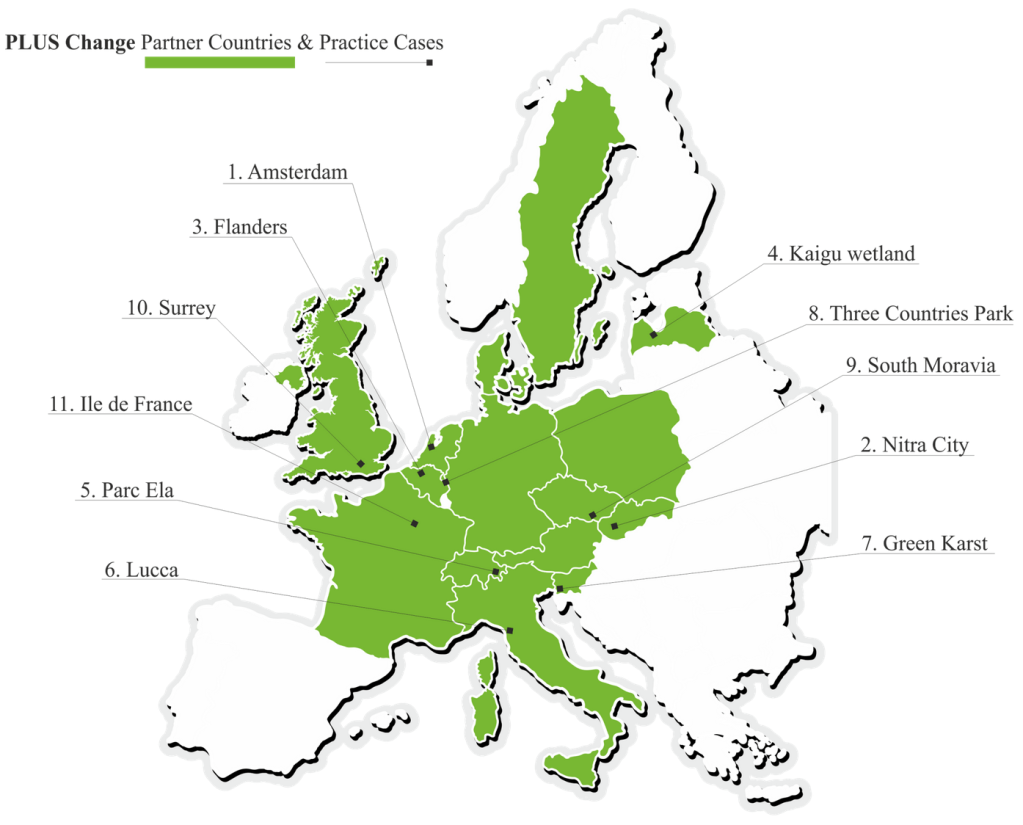
Governance systems are facing challenges to foster land-use strategies that support climate protection, social well-being and biodiversity conservation. The new EU-funded project “PLUS Change” involves 23 partner organizations across the European Union to provide robust evidence on and improve land-use decision-making for addressing climate change and biodiversity conservation. PLUS Change is co-ordinated by the Czech Globe research institute (see here for their introduction to the project). Using a transdisciplinary research approach, the project consortium is working with 11 planning authorities and regional development agencies in twelve case regions to firmly ground our research in the realities of different geographical, historical, cultural and political contexts and hence to produce policy-relevant knowledge on governing land-use towards sustainability.

To do so, the project will (1) bridge across biodiversity and climate, recognising them as problems that share many of the same underlying drivers, and must be solved together; (2) bridge between individual behaviour changes of citizens and broader systems-wide changes in decision-making and policy at levels from local to national to EU; and (3) bridge between different areas of expertise to create a truly transdisciplinary project that includes social sciences, land use modelers and practitioners of land use planning.

The scientific partners in PLUS Change will work on land-use modelling, produce a planning toolkit and test participatory methods in the case regions.

Our research group will use meta-analytical tools to synthesize evidence on how governance and policy impact sustainable land-use change. We aim to identify what governance approaches and interventions (evidence-based? participatory? collaborative? scale-adapted? etc.) have worked in what contexts to achieve a more sustainable land-use. Building on these results, in-depth empirical research (interviews, document analysis) will be conducted in 12 local practice cases in various countries across Europe. We will develop a rich understanding of the historical development of land use, contentious land use issues and conflicts, and the role of policy, tenure and governance arrangements in shaping land use change.

Interested to join the Leuphana PLUS Change team as a PhD researcher? Shortly, we will advertise an open position at https://www.leuphana.de/en/university/open-positions/research-teaching.html.

Spatial mismatches impede the effective governance of global commodity flows

By Johanna Coenen, Gabi Sonderegger, Jens Newig, Patrick Meyfroidt, Edward Challies, Simon L. Bager, Louise M. Busck-Lumholt, Esteve Corbera, Cecilie Friis, Anna Frohn Pedersen, Perrine C.S.J. Laroche, Claudia Parra Paitan, Siyu Qin, Nicolas Roux, Julie G. Zaehringer 

In today’s interconnected world, local sustainability issues such as deforestation, biodiversity loss, agri-chemical pollution and food insecurity are increasingly shaped by global commodity flows and the actions of distant actors. The demand for commodities such as soy, palm oil, cocoa, rubber and meat can have adverse social and environmental consequences in the production regions that are often geographically distant from the consumption sites. Such sustainability challenges often transcend traditional political boundaries, posing difficulties in designing governance institutions that adequately fit their scale. Where governance institutions fail to align with the scale of the problems they are meant to address, we encounter issues referred to as “problems of fit”, “mismatches”, or “misfits”. The governance of global commodity flows is particularly beset with such problems of fit. 

In our recent article, published in Ecology and Society, we explore the spatial dimension of governance fit concerning global commodity flows. In doing so, we synthesize some key findings of the COUPLED project. We shed light on two key types of governance mismatches: boundary and resolution mismatches (Table 1). 

Table 1. Boundary and resolution mismatches in the governance of telecoupled social-ecological systems.

 Boundary mismatchResolution mismatch
DefinitionGovernance institutions neglect social-ecological problems that transcend established administrative or jurisdictional boundariesGovernance institutions have too coarse a spatial resolution than is suitable to address the social-ecological problems at hand
Underlying problemLack of governance extentLack of governance precision
MechanismSpilloverLeakagePanacea trap
DescriptionGovernance institutions do not govern a social-ecological problem that expands beyond their administrative or jurisdictional boundariesGovernance institutions address a social-ecological problem but create leakage(s), i.e., counterproductive effects outside the targeted area or domain of the interventionGovernance institutions are not specific enough to be effectively implemented and enforced

We present empirical examples of the different types of mismatches from both public and private governance perspectives in this publication. We also graphically illustrate the different mismatches. For example, Figure 1 displays boundary mismatches. 

Figure 1. Boundary mismatches. Governance institutions neglect social-ecological problems that transcend established jurisdictional boundaries due to spillovers (A) or leakages (B).


Furthermore, we examine three approaches to address mismatches, namely due diligence laws and policies, landscape and jurisdictional approaches to supply chain governance, and environmental provisions in trade agreements. We show that any attempt to resolve boundary or resolution mismatches comes with the risk of creating new mismatches. We find that no single governance approach can address all mismatches, emphasizing the need for the alignment of multiple governance approaches to effectively govern global commodity flows. 


Read the publication 

Coenen, J., Sonderegger, G., Newig, J., Meyfroidt, P., Challies, E., Bager, S., Busck-Lumholt, L. M., Corbera, E., Friis, C., Frohn Pedersen, A., Laroche, P. C. S. J., Parra Paitan, C., Qin, S., Roux, N., & Zaehringer, J. G. (2023). Towards spatial fit in the governance of global commodity flows. Ecology and Society, 28(2). 24.

Critical scholars, transformationists, and cumulators – How the environmental governance research community engages the issue of policy relevance, and why we argue for a stronger role of knowledge cumulation

By Jens Newig & Michael Rose

Environmental governance research seems to struggle with its own position towards the science-society interface. For example, the issue of policy-relevance was intensively discussed during a panel at the Earth System Governance Conference in November 2018 on “How can the Earth System Governance community effectively contribute to the implementation of Sustainable Development Goals?” At the panel, one group of participants – let’s call them the ‘critical scholars’ – suggested that in our diverse community, scholars may reject an instrumental view of science helping to “implement” the SDGs. In contrast, a second group – let’s call them the ‘transformationists’ – supported an activist view in which researchers should become agents of change towards sustainability (which is what has occasionally been termed transformative sustainability science).

A third group – let’s call them the ‘cumulators’ – argued that it is mainly through providing robust evidence on “what works where and how” that social-science research can support change towards sustainability. According to this view, environmental governance scholars should hold up their high (inner-)scientific standards but at the same time build knowledge that can inform policymaking and thereby facilitate sustainability. Some in the room voiced their frustration that policymakers hardly listen to environmental governance research, but rather to natural science research – even though the latter might be less policy-relevant. It was found that while policymakers are looking for evidence, social scientists are often either reluctant to even speak of evidence, or unable to produce it.

The panel in Utrecht seemed like a microcosm of environmental social-science research, with critical researchers, transformationists and cumulators voicing reasonable and legitimate positions and arguments. While we acknowledge and appreciate the community’s diversity of approaches and methods, we also see the fragmentation and incoherence of the field being a barrier when it comes to producing cumulative knowledge. Any scientific field that shows ‘progress’ in the sense of becoming better and better at understanding and explaining natural or social dynamics needs to be cumulative: new theories and empirical findings need to build on existing ones – either by challenging (‘falsifying’) existing research, by confirming it, or by adding nuances. By and large, environmental governance research appears to be hardly cumulating. And therefore, it seems to produce little reliable and knowledge on how and why what forms of governance help to achieve environmental sustainability.

And indeed, quite recently in the broader community of sustainability research, there appears a renewed, growing interest into how science and scholarship can produce cumulative knowledge (Pauliuk 2020); how research results – including qualitative data – can be synthesized to contribute to sustainability policy (Alexander et al. 2020); and how cumulative knowledge production in the field of environmental governance can be fostered through common research protocols (Cox et al. 2020).

In a new paper, we join these voices and venture to suggest a research reform agenda for environmental governance research (Newig and Rose 2020, open access). We discuss what knowledge cumulation means for environmental governance research, and what challenges it faces. We propose three concrete areas for reform:

  • First, we make a case for an agreed canon of concepts and definitions shared within the community, while being open to reinterpretations and novel concepts. This could ideally be realized, among others, through wiki-supported common dictionaries.
  • Second, we advocate the stronger use of comparative research approaches and meta-analytical methods such as the case survey methodology, or systematic reviews, to cumulate (published) case-based evidence – drawing on both ‘successful’ and ‘unsuccessful’ cases.
  • Third, we argue for a systematic recognition of the institutional, political, and social context of governance interventions. This becomes increasingly important to the extent that meta-analyses reveal general patterns and trends that nonetheless vary with context. Here, we elaborate on what constitutes a ‘case’ of a governance intervention as opposed to its ‘context’, and discuss challenges and opportunities of integrating published case-based insights with knowledge on the respective context (which is currently seldom done).

However, this seems only the beginning of what could be a decade-long journey which may take many different paths. We would therefore love to see a broad discussion on the ideas put forward here. Whether from critical scholars, transformationists, cumulators or any other colleagues in the field – any comments, critique and ideas on how to move forward are more than appreciated!

Cited literature

Communicating research results: A science Comic about the EU Water Framework Directive

By Nadine Schröder

In times of Covid-19, we may sit down even more often to read research papers for engaging in traditional scientific exchange of ideas through the written word. However, under time constraints and with the interest in fostering exchange between science and practice, other formats than traditional papers are helpful in opening a lively discussion. Here I want to share my experience in creating a science comic with you. I developed a science comic discussion paper titled “Trapped between barriers OR Flowing despite barriers?”. The comic visualizes the existing local barriers for the implementation of the EU Water Framework Directive in six German states.

Comic_extract Blog Beitrag

After a workshop at IRI THESys in January 2019, I was interested in trying to create a scientific comic based on my Ph.D. research. What started as an experiment with an open-end, became an enriching experience. I worked together with the artist Nikhil Chaudhary, who I met nine times to discuss the scientific background of the story, develop the storyline, and gather ideas for the visualization. During these meetings we used rapid prototyping for visualizations. While I drafted the texts, Nikhil drafted the drawings. At the very end, Nikhil created the final artwork. The final steps towards the publication of the comic paper resembled the usual process of paper production.

The final drawing steps coincided with my plans to participate in a forum organized by nature conservationists on the implementation of the EU Water Framework Directive. The idea of creating a German version of the comic to be presented as a poster to practitioners taking part in the forum was quickly realized. The comic fully unfolded its potential as a communication instrument. People could quickly read and grasp the content of my research, which provided a good basis for spontaneous discussions.

Creating this format transformed also my thinking regarding several of my findings. It highlighted the emotional aspects of the topic. In a traditional paper, these aspects would be shadowed by charts and tables, probably leading to a different weighting of the same facts. Yet, this visualization process may be an additional method for exploring data and gathering additional insights.
Anyway, a science comic, whether being a learning process, an analytical tool or a communication instrument, is a worthwhile format for science!

I hope, I sparkled your curiosity. The Coronavirus shutdown delayed the official publication by Humboldt University. However, you can already find the English and the German version of the comic, as well as the slides on the creation process presented at an IRI THESys lunch talk in January 2020, below and on my profile.

I would like to thank IRI THESys at Humboldt University, which provided the funding for the artistic work. And a big thanks to Nikhil, for this enriching cooperation!

comic_titlepage für Blog Beitrag

Schröder, N. J. S., Chaudhary, N. (2020). Trapped between barriers OR Flowing despite barriers? THESys Discussion Paper No. 2020-2. Humboldt-Universität zu Berlin, Berlin, Germany. Pp. 1-13.

Schröder, N. J. S., Chaudhary, N. (2020). WRRL-Umsetzungshürden: Unpassierbar oder durchgängig für Maßnahmenträger? THESys Discussion Paper No. 2020-1. Humboldt-Universität zu Berlin, Berlin, Germany. S. 1-13.

Lunch Talk presentation on creating a science comic on local barriers for WFD implementation in Germany 17.01.2020 at IRI THESys Humboldt University


Macro-Level Datasets for Sustainability Governance

By Michael Rose

Comparative politics scholars love macro data. To comparatively analyze all kinds of nation states and institutions, they build datasets on their characteristics. For example, there are several datasets and indices that help to assess and eventually measure democracies and autocracies worldwide, such as the Freedom House Index, Varieties of Democracy, The Economist’s Democracy Index, or the Polity Project. But data are systematically collected and made available to the research community far beyond democracy indices (see below).

In sustainability governance research, though, these kinds of databases are rarely used or developed. This is a pity, as comparative (macro) data could help to conduct mid- and large-n studies, account for important parts of context variance in comparative case studies, and thereby facilitate relating and cumulating knowledge.

The following list offers a selection of open access datasets used in political science that can be of great benefit for sustainability governance scholars. Feel free to post additional datasets in the comment section!

The Comparative Constitutions Project codes the world’s constitutions, including variables on the states’ polity (branches of government, formal institutions, election rules, federalism) and the constitutions’ issue areas, e.g. if and how the constitution refers to the environment and natural resources. Constitutional changes are tracked on a yearly basis (Elkins et al. 2019).

Polity IV accounts for democratic and authoritative regimes, including variables such as the central state authority, executive constraints, political participation, and transitions (Center for Systemic Peace 2019).

ParlGov provides data on parties, elections and cabinets for 37 western democracies (Döring and Manow 2019).

The Party Manifesto Project codes, inter alia, the party family of ecological parties and statements regarding environmental protection and sustainability in party manifestos (electoral programs) (Volkens et al. 2019).

World Values Survey and European Values Study include aggregatable information on the interviewee’s membership in environmental organizations, attitudes towards environmental care, participation in demonstrations for the environment, donating behavior towards ecological organizations, confidence in the environmental protection movement, and satisfaction with issues such as air quality, public transport, or water quality (Inglehart et al. 2019; European Value System Study Group et al. 2019).

The Sustainable Governance Indicators analyze the policy performance and governance capacities in EU and OECD countries. This includes environmental policies and outcomes (such as waste and GHG emissions), the participation in multilateral environmental agreements and evidence-based instruments such as sustainability checks (Bertelsmann Stiftung 2018; Schraad-Tischler et al. 2018).

The Environmental Performance Index analyses 24 performance indicators for 180 countries (Wendling et al. 2018).

And, of course, the statistics departments of international organizations such as the World Bank and the OECD provide many additional time-series data on key economic, social, environmental, government and development indicators (World Bank 2019; OECD 2019).

Moreover, in their Sustainable Development Report, the Bertelsmann Foundation and the Sustainable Development Solutions Network jointly track the SDG achievements of most of the world’s nations statistically (Sachs et al. 2019).

Cited literature

Bertelsmann Stiftung (2018): Sustainable Governance Indicators. Gütersloh. Available online at http://www.sgi-network.org.

Center for Systemic Peace (2019): Polity IV Project. Vienna (Virginia). Available online at https://www.systemicpeace.org/polityproject.html, checked on 8/14/2019.

Döring, Holger; Manow, Philip (2019): Parliaments and governments database (ParlGov). Information on parties, elections and cabinets in modern democracies. Available online at parlgov.org, checked on 8/13/2019.

Elkins, Zachary; Ginsburg, Tom; Melton, James (2019): Comparative Constitutions Project. Informing constitutional design. Available online at https://comparativeconstitutionsproject.org.

European Value System Study Group; Tilburg University; GESIS (2019): European Values Study. Tilburg, Mannheim. Available online at https://europeanvaluesstudy.eu, checked on 8/13/2019.

Inglehart, R.; Haerpfer, C.; Moreno, A.; Welzel, C.; Kizilova, K.; Diez-Medrano, J. et al. (2019): World Values Survey. Edited by JD Systems Institute. Madrid. Available online at http://www.worldvaluessurvey.org, checked on 8/13/2019.

OECD (2019): OECD.Stat. Paris. Available online at https://stats.oecd.org/.

Sachs, J.; Schmidt-Traub, G.; Kroll, C.; Lafortune, G.; Fuller, G. (2019): Sustainable Development Report 2019. Transformations to achieve the Sustainable Development Goals. Edited by Bertelsmann Stiftung, Sustainable Development Solutions Network (SDSN). New York. Available online at https://sustainabledevelopment.report.

Schraad-Tischler, Daniel; Schiller, Christof; Hellmann, Thorsten; Lopes, Elisabeth Faria (2018): Policy Performance and Governance Capacities in the OECD and EU. Sustainable Governance Indicators 2018. Edited by Bertelsmann Stiftung. Gütersloh. Available online at https://www.sgi-network.org/docs/2018/basics/SGI2018_Overview.pdf, checked on 8/2/2019.

Volkens, Andrea; Krause, Werner; Lehmann, Pola; Matthieß, Theres; Merz, Nicolas; Regel, Sven; Weßels, Bernhard (2019): The Manifesto Data Collection. Manifesto Project (MRG/CMP/MARPOR). Edited by Wissenschaftszentrum Berlin für Sozialforschung (WZB). Berlin. Available online at https://manifesto-project.wzb.eu, checked on 8/13/2019.

Wendling, Z. A.; Emerson, J. W.; Esty, D. C.; Levy, M. A.; Sherbinin, A. de; et al. (2018): 2018 Environmental Performance Index. Edited by Yale Center for Environmental Law and Policy. New Haven. Available online at https://epi.yale.edu.

World Bank (2019): World Bank Open Data. Free and open access to global development data. Available online at https://data.worldbank.org/.

What is ‘environmental governance’? A working definition

By Edward Challies and Jens Newig

As researchers, we are fully aware that ‘governance’ (like many similar concepts) is multi-facetted, ambiguous and subject to changing interpretation over time. Yet in practice we tend to assume we know what we mean when we employ the term – at least in our research team.

As university teachers, however, we cannot rely on this implicit shared understanding, and need to be more explicit. For teaching purposes, the two of us have therefore developed our own working definition of environmental governance – drawing on previous work by scholars of governance, and of environmental governance in particular.

‘Governance’ has emerged as a prominent topic in disciplines across the social sciences at large. Since the mid-1990s, cross-disciplinary governance research has increasingly grappled with shifting roles of and interactions among societal and political actors engaged in efforts to govern all facets of social life. While the term is ubiquitous, its usage varies and many definitions exist. In the political science tradition, discussion of governance has tended to be rather state-centric, concerned with “change in the pattern and exercise of state authority from government to governance” (Bevir and Rhodes 2011, p. 203). Governance, in this context, refers to a bundle of (new) governing practices and structures characterised increasingly by market mechanisms and network forms, as opposed to primarily by hierarchical state-based modes of governing (see Rhodes 1997; Stoker 1998; Pierre and Peters 2000). The main challenge for states then becomes one of retaining legitimacy and effectiveness in steering relatively ‘autonomous self-governing networks of actors’ (Stoker 1998), or ‘self-organising inter-organisational networks’ (Rhodes 1997).

Despite the importance of various combinations of network and market relations for contemporary governance, and their significant implications for the role and meaning of the state, we adopt here a rather broader conceptualisation of governance (following Kooiman 1993, 2003), which encompasses a wide spectrum of interactions among societal actors (within and across the public and private sectors, civil society and the citizenry) aimed at securing collective interests. According to Kooiman, governance – as ‘social political interaction’ – comprises  “the totality of interactions in which public as well as private actors participate, aimed at solving societal problems or creating societal opportunities; attending to the institutions as contexts for these governing interactions; and establishing a normative foundation for all those activities” (2003, p. 4).

In specifying governance arrangements in the environmental context, Lemos and Agrawal (2006, p. 298) identify as relevant the full range of “regulatory processes, mechanisms and organizations through which political actors influence environmental actions and outcomes”. They stress that while governance is distinct from government, it does encompass the actions of the state, alongside diverse non-state actors (ibid.).

Such definitions allow for consideration of a range of ‘new’ modes of environmental governance (see Driessen et al. 2012), combining aspects of network and market relations without neglecting the (still important) activities of governments, and provide for engagement with the widely invoked ‘shift from government to governance’ (Rhodes 1996; Peters and Pierre 1998) as a contingent tendency rather than a clean break with the past.

On the basis of this perspective on governance, we can define environmental governance as

the totality of interactions among societal actors aimed at coordinating, steering and regulating human access to, use of, and impacts on the environment, through collectively binding decisions. Environmental governance arrangements may be directed towards a range of causes – including conservation and environmental protection, spatial and land use planning, (sustainable) management of natural resources, and the protection of human health – and operate across scales to address local and global environmental problems.

Within this we seek to acknowledge a variety of motives for environmental governance. These may range from rather more ecocentric motivations to conserve and protect the environment for its intrinsic value, to instrumental rationales for the sustainable management of resources for human benefit, to the mitigation of immediate or long-term hazards and risks to human health and wellbeing. We also try to capture the implications of intensifying global interconnectivity, and the way in which this increasingly forces governing actors to confront problems that escape their immediate reach and jurisdiction.

As an analytical field, environmental governance research describes scientific and scholarly endeavour to understand and explain these relationships. As a normative project, environmental governance seeks to achieve some degree of balance between collective social interests and environmental protection. This can be thought of, again following Kooiman (2003), as solving social-environmental problems and/or realising social-environmental opportunities, however these might be defined in a given context.


Cited literature

Bevir, M. and R.A.W. Rhodes (2011) The Stateless State, in The SAGE Handbook of Governance, ed. M. Bevir. London: Sage: 203-17.

Driessen, P.P.J., C. Dieperink, F. van Laerhoven, H.A.C. Runhaar and W.J.V. Vermeulen (2012) ‘Towards a Conceptual Framework for The Study of Shifts in Modes of Environmental Governance – Experiences From The Netherlands.’ Environmental Policy and Governance 22 (3): 143-60.

Kooiman, J. (1993) Social-Political Governance: Introduction, in Modern Governance: New Government-Society Interactions, ed. J. Kooiman. London, Thousand Oaks, New Delhi: Sage: 1-8.

Kooiman, J. (2003) Governing as Governance (London: Sage).

Lemos, M.C. and A. Agrawal (2006) ‘Environmental Governance.’ Annual Review of Environment and Resources 31: 297-325.

Peters, B.G. and J. Pierre (1998) ‘Governance without Government? Rethinking Public Administration.’ Journal of Public Administration Research and Theory 8 (2): 223-43.

Pierre, J. and B.G. Peters (2000) Governance, Politics and the State (New York: St. Martin’s Press).

Rhodes, R.A.W. (1996) ‘The New Governance: Governing without Government.’ Political Studies 44 (4): 652-67.

Rhodes, R.A.W. (1997) Understanding Governance. Policy Networks, Governance, Reflexivity and Accountability (Buckingham: Open University Press).

Stoker, G. (1998) ‘Governance as Theory: Five Propositions.’ International Social Science Journal 50 (155): 17-28.

Towards Sustainability in EU-Brazil Trade Negotiations

By Jens Newig, Benedetta Cotta, Johanna Coenen, Andrea Lenschow, Edward Challies and Almut Schilling-Vacaflor

While European countries and EU policies have made some progress in enhancing domestic sustainability, we are pretty much failing when it comes to taking responsibility for the far-away consequences of our way of living. Chemical pollution and loss of native forests are two striking examples of such distant effects of our local meat production that relies on Brazilian soy imports as protein-rich animal feed. We call such distant effects “global telecoupling”. Labels for sustainable production standards developed by private industry and non-governmental organizations (such as by the Round Table for Responsible Soy) have not proven overly effective. Governmental bodies in Europe should therefore stronger than they did previously take up their responsibility to pass effective policies. In our team, we are currently studying the  governance responses to unsustainable global telecoupling, in the DFG-funded project “GOVERNECT”, and the EU-ITN “COUPLED”.

With a view to current EU-Brazil trade negotiations, an open letter was published yesterday in Science, with co-signatories including 602 scientists from every country in the EU and two Brazilian Indigenous organizations, which together represent over 300 Brazilian Indigenous groups. The letter calls to prioritize human rights and the environment in EU trade talks with Brazil.

Participatory and collaborative environmental governance – just symbolic exercises to sustain unsustainability?

By Jens Newig

No matter if it’s about siting new landlines, declaring protected areas or developing water management plans: Citizen panels, stakeholder roundtables and deliberative decision-making have become commonplace in Western democracies. While great hopes have been placed in such participatory and collaborative forms of governance to advance environmental sustainability, the debate is now more nuanced and partly skeptical as concerns both their democratic and their sustainability-oriented benefits. Ingolfur Blühdorn and Michael Deflorian from WU Vienna add an interesting facet to this debate, building strongly on Ingolfur Blühdorn’s earlier work on simulative politics and democracy. Their thought-provoking article entitled “The Collaborative Management of Sustained Unsustainability: On the Performance of Participatory Forms of Environmental Governance” was published just two weeks ago in Sustainability.

What makes this an interesting read is its broader sociological perspective. Rather than asking how governance does or should function to achieve normative goals, the article investigates why participatory and collaborative forms of governance are proliferating and which societal functions are served through these. The authors start out by arguing that collaborative and participatory forms of governance are neither (1) particularly democratic nor (2) likely to be effective in the sense of their transformative potential towards sustainability. This, they argue is because (1) collaborative and participatory forms of governance are typically coopting citizens or selectively empowering only some actors who do not have a clear democratic mandate, and (2) because “their proliferation has, as yet, not taken modern consumer societies much closer to the great socio-ecological transformation”. This, the authors speculate, is “perhaps because the prevailing forms of decentralized and collaborative governance are explicitly designed not to disrupt the established order and are, therefore, structurally unable to deliver the kind of change that scientists and environmental movements demand.” If this is so, then why are collaborative and participatory decision-making processes becoming so prevalent?

The key to understanding this apparent puzzle, the authors argue, lies in the performative aspect of governance. Referring to the title of our 2018 paper on conceptualizing the “performance of participatory and collaborative governance”, the authors re-interpret the notion of ‘performance’. In a nutshell, they distinguish

  • performance as delivery of outputs – both in a “democratic” and in a substantive (“systemic”) sense – from
  • performance as theatrical display, enactment or illusion in the sense of symbolic or simulative politics.

It is this second perspective that the article focuses on, proposing “that these new modes of environmental governance have become so prominent because they actually correspond very closely to the particular dilemmas, preferences, and needs of contemporary consumer societies—notably the desire to sustain particular lifestyles and understandings of freedom and self-realization, which are known to be socially and ecologically destructive (unsustainable)”. Hence, new modes of environmental governance, “if assessed from the perspective of these contemporary dilemmas, preferences, and needs, they do actually perform exceptionally well. More specifically, they provide contemporary consumer societies with a practical policy mechanism that helps them to reconcile the widely perceived seriousness and urgency of socio-environmental problems with their ever more visible inability and unwillingness to deviate from their established societal order, patterns of self-realization and logic of development.” Put simply, while we cannot achieve sustainability and at the same time continue the established logic of consumption, participatory governance helps us to at least symbolically resolve this apparent contradiction. ‘Symbolic’ stems from the Greek term symballein, meaning to ‘throw together’ – here otherwise irreconcilable aims (I’ve written earlier about symbolic politics and legislation, as it happens in a special issue edited by Ingolfur Blühdorn). Hence, ‘performing’ collaborative governance gives us the feeling of teaming up for sustainability, while at the same time we do not give up on our unsustainable lifestyles. As a consequence, these collaborative practices contribute to stabilizing (rather than transforming) current systems of unsustainability – thus the argument of the authors.

While I find these lines of arguments illuminating, my main point of criticism concerns the lacking empirical grounding. The authors illustrate their points by three empirical cases, but these of course cannot be representative. We should be aware, therefore, that the performative functions identified here may apply to some cases of participatory and collaborative governance, but not to others.

Assuming we do strive for environmental sustainability, and assuming further that governance (by whatever mode) can play a vital, if not indispensable role in this – what insights do we gain from this article? In terms of normative guidance, this paper may leave us with a fatalistic impression that not much can actually be done, because – and so long as – societies embrace the “notions of freedom, self-determination, self-realization”, which are “firmly based on the principle of sustained unsustainability”. Having said that, I see three productive lessons we may take from the article:

  • First, the paper is enlightening for all those of us who either adhere to rationalist and instrumentalist models of decision-making, or who see decision-making through the lens of power-play (in which big business tends to ‘win’). Having read this paper, one can no longer claim not to have heard of the potential dangers of participatory and collaborative governance – not just because it may be ineffective but also because in a subtle, hidden, yet striking way it may serve to obscure its symbolic functions which result in sustaining unsustainability.
  • Second, these insights by no means imply an empirically grounded verdict! Despite its three examples, this is not an empirical paper. In fact, the jury is still out on how participatory and collaborative environmental governance actually delivers (to avoid the term ‘performs’) in both a democratic and a sustainability-oriented sense. What is required, more than ever, is solid empirical evidence of which modes of governance ‘deliver’ und under what circumstances.
  • Third, from a governance perspective, it is one thing to be aware about the potential deficiencies and misleading hopes of participation; it is another to ask: What is the alternative? Should we go “back” to strong state-based decision-making? Is there just too much governance and too little government? Arguably, we not only don’t know enough about the delivery of participatory and collaborative governance, but also we lack robust evidence on the role of expert-led decisions, the role of administrative capacities and of elite-networks in shaping decisions for environmental sustainability.

All in all, I highly recommend this enlightening article – not least for use in teaching sustainability governance courses, confronting students with sobering insights on the functions of participatory and collaborative governance, and triggering discussions about ways to effectively govern towards sustainability – including or not collaborative forms.

Workshop on “Rethinking the governance of European Water protection” 

By Nadine Schröder

When:  January 8th-9th 2019

Where: Helmholtz Centre for Environmental Research (UFZ) in Leipzig

Organizers:

Nadine Schröder  (Leuphana University Lüneburg)

Barbara Schröter (Leibniz Centre for Agricultural Landscape Research (ZALF))

Frank Hüesker (UFZ Leipzig)

Content:

During this workshop we want to discuss on European Water governance and to address frameworks/ lenses/ concepts/ theories and methods to research water governance: Which factors, levels and scales do they focus on? Which roles play participation, sector integration and basin approaches? We draw conclusions how the governance might be improved in favor of better performance: Which factors may influence local, regional and national success or failure? Are best-practice examples identifiable empirically? Additionally, we critically reflect how the chosen frameworks and methods predetermine the findings of regulating parameters. We aim for joint products as results of the workshop, like e.g. a special issue, a book, joint conference panels, seeding joint projects, work on the science-policy interface, a manifest and so on, which is open to be discussed and depends on the interest of the participants.

You can have a look at the abstract and preliminary program here:

Preliminary Program

Abstract


Report