Special Issue on Knowledge Cumulation in Environmental Governance

By Michael Rose and Jens Newig

Over the past years, we’ve watched environmental governance research expand at impressive speed. New case studies, new concepts, new methods — the field is vibrant. Yet one question has kept nagging at us: Are we actually building knowledge, or are we sometimes also talking past each other?

This simple question ultimately motivated a group of scholars from the Earth System Governance taskforce on Knowledge Cumulation to work on a special issues, which is now published with Environmental Policy and Governance.

Environmental governance research is wonderfully diverse, but that diversity also makes it difficult to connect findings across contexts. Too often, insights remain isolated: a promising mechanism here, an interesting participatory process there — but without linking back to previous work, without clarifying whether what we’ve learned travels, under which conditions, and with what implications. If we want the field to mature — and to be genuinely useful for policymakers and practitioners — we need to become more deliberate about how we build on each other’s work.

The contributions in this issue take up this challenge from different angles. Some examine where cumulation is already happening (and where it isn’t). Others propose ways to measure or strengthen cumulation — through comparative designs, transparent data practices, systematic reviews, or conceptual clarification. Still others reflect critically on whether a stronger push for cumulation risks narrowing the field or crowding out diverse ways of knowing. Taken together, they open up a conversation we believe the field has long needed.

Our hope is that this special issue sparks more reflection — and more intentionality — in how we, as a research community, create knowledge that genuinely adds up. Not by forcing uniformity, but by building bridges: across cases, disciplines, methods, and perspectives. We as guest editors – Michael Rose, Jens Newig, Sina Leipold – invite you to explore the issue, engage with its arguments, and join the conversation on what cumulative knowledge in environmental governance could and should look like.

This way to the Special Issue page: https://onlinelibrary.wiley.com/doi/toc/10.1002/(ISSN)1756-9338.knowledge-cumulation-environmental.

Two PhD positions on Sustainability Policy and Governance of Global Value Chains

By Jens Newig

As part of a Lower Saxony project consortium on the sustainability governance of global supply chains, two political science-oriented doctoral positions in the field of “Sustainability Policy and Governance of Global Value Chains (GVC)” are being advertised at the professorships of Andrea Lenschow (Osnabrück) and Jens Newig (Lüneburg):

A short project introduction is available here.

Deadline for applications is September 30, 2024.

We look forward to interesting appliations!

New Collaborative Project on the Sustainability Governance of Global Value Chains

By Jens Newig

Updated on 4 July 2024.

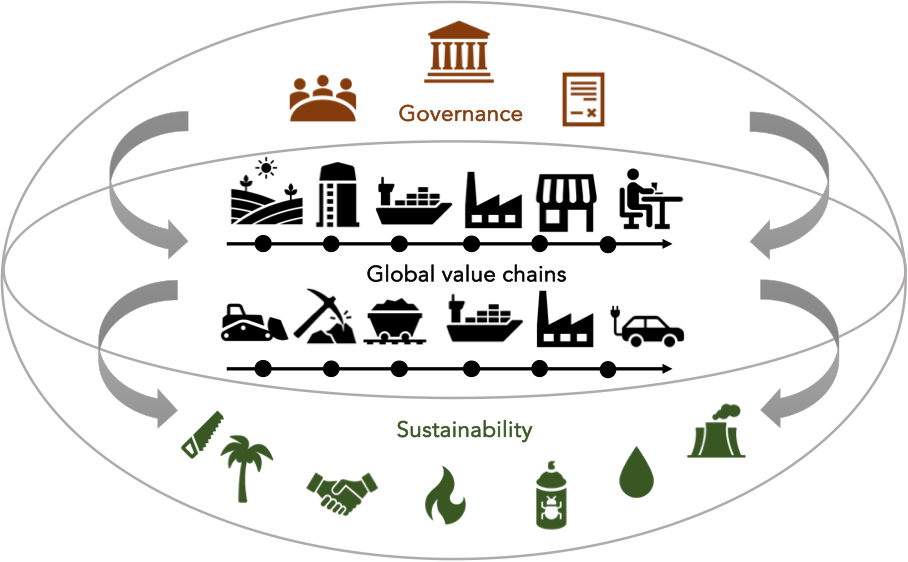
The global demand for raw materials and agricultural products has led to unsustainable working conditions and environmental impacts, especially in countries of the Global South. Efforts to address these issues have largely relied on voluntary certification and auditing by businesses, but since the mid-2010s, countries have implemented binding regulations such as France’s 2017 Loi de Vigilance, Germany’s 2023 Supply Chain Due Diligence Act, and the EU’s Corporate Sustainability Due Diligence Directive, with their effects still largely unexplored.

A new collaborative project, funded by the VolkswagenFoundation and the Lower Saxony Ministry of Science and Culture, will explore effects, potentials, and limitations of sustainability governance in global value chains (GVC). Leuphana University Lüneburg (lead) and Osnabrück University (co-lead) are collaborating with Oldenburg University and the German Institute for Global and Area Studies (GIGA).

Existing private and public approaches to the sustainability governance of GVCs face significant challenges. The geographic distance of many GVCs often leads to a lack of knowledge among Global North actors regarding the socio-economic, cultural, and ecological impacts at production sites in the Global South. Additionally, current information management systems fail to provide adequate data for making supply chains more sustainable, and the concept of “telecoupling” highlights the complexity of adapting international regulations to local conditions. Furthermore, GVCs are characterized by divergent interests and power asymmetries, making transparency and traceability essential yet difficult to achieve. Compliance with laws and standards remains challenging, particularly in regions with weak state capacities, necessitating monitoring, verification, sanctions, and capacity-building measures.

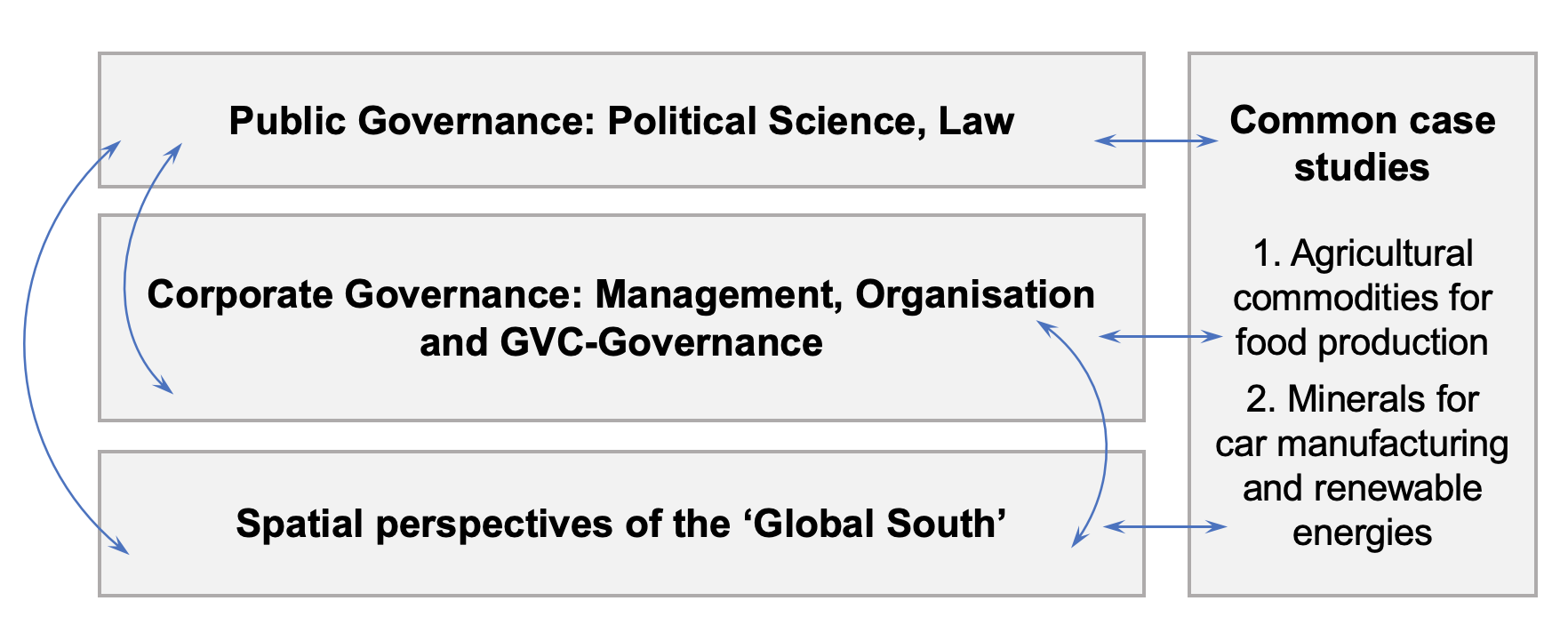
To explore these complex issues, the collaborative project takes a multi-perspective approach encompassing public governance (political and legal aspects), corporate governance (company networks and their practices), and regional perspectives (focusing on the Global South). The project will utilize empirical case studies in sectors crucial to Lower Saxony, such as agricultural raw materials for food production and minerals for automotive manufacturing and renewable energy production.

Key features of the research cluster include:

  1. Interdisciplinary integration of political, legal, economic, socio-technical, and geographical perspectives.
  2. Integration of perspectives from both the Global North and South.
  3. An empirical multi-sector comparison of GVCs relevant to Lower Saxony.

This comprehensive approach seeks to promote a deep understanding of how public regulations, corporate sustainability management, and technological solutions can drive the desired transformations along GVCs, ultimately contributing to sustainable global development.

In the months to come, two post-doc positions and nine PhD positions will be advertised across the collaborative project.

New Masters programme on Sustainability Governance and Law

By Jens Newig

Starting this fall, Leuphana University is offering a new Master’s programme entitled ‘Sustainability Science: Governance and Law’, as part of a set of four new Master’s programmes that will replace the existing Master of Sustainability Science.

Unique in the German university landscape, the new Master’s programme combines a strong research orientation with inter- and transdisciplinary projects.

“The Sustainability Science: Governance and Law (M.A.) programme deals with social and political structures: What are good and legitimate decision-making processes? What role does democracy play – especially from a global perspective? What forms of participation exist? Who has to decide what at what level? Certain decisions have to be made at national or even international level, such as the Paris Climate Agreement, which affects the entire globe. Which actors have to be involved? What are effective policy instruments? Our graduates can later join public administration, from local authorities to international organisations. However, NGOs or advisory boards are also an option. We have an academic degree programme that is geared towards practice. We want our graduates to be ambassadors of scientific thinking,” explains Prof Dr Jens Newig, Professor of Governance and Sustainability.

Further information on the programme: https://www.leuphana.de/en/graduate-school/masters-programmes/sustainability-science-governance-and-law.html.

Deadline for applications is June 1st.

Call for abstracts (and papers): Special Issue on Knowledge Cumulation in Environmental Governance Research

Note: Deadline extended until 10 September!

We (Michael Rose, Jens Newig and Sina Leipold) welcome contributions to a planned Special Issue in the journal Environmental Policy and Governance.

Environmental governance research has generated a vast body of knowledge in recent years, reflecting the immense challenges associated with governing the various sustainability issue confronting humanity. However, scholars are increasingly raising concerns about whether the growing number of publications on environmental governance truly contributes to the urgently needed scientific progress (Newig and Rose 2020). Do the numerous individual scholarly contributions create a cumulative and reliable body of research capable of guiding policy and practice (Pauliuk 2020)?

While there are different perspectives on the drivers of scientific progress, it is widely acknowledged that the cumulation of knowledge plays a significant role (Campbell 2019; Elman et al. 2020; Pauliuk 2020; Park et al. 2023). Google Scholar, the world’s largest academic research engine, alludes to this fact by referencing Isaac Newton’s quote about “standing on the shoulders of giants”. However, in our field, we often find ourselves talking past each other, resulting in fragemented knowledge, rather than building upon the work of our colleagues. It is crucial to acknowledge that the process of cumulating knowledge on a specific research topic is not merely about adding new papers to the stock. Instead, it “occurs when new findings are integrated with existing knowledge to create a more comprehensive understanding of the subject” (Newig et al. 2023: 3).

To be more precise, “knowledge may cumulate on both empirical findings and theory, by

  • adding to existing research in the sense of confirming findings and/or widening their spatial, temporal or topical applicability;
  • challenging existing research in the sense of falsifying or rejecting prior research based on new findings (thus raising questions about either quality or replicability); and
  • refining existing research, by specifying scope conditions, causal mechanisms, amending sets of variables, or generating new hypotheses” (Newig et al. 2023: 3, see also Mahoney 2003, Cairney 2013, and Newig & Rose 2020).

The production of cumulative knowledge is by no means a matter of course. Social sciences and sustainability sciences as well as environmental governance research, which is informed by both, have been criticized to insufficiently cumulate knowledge. Suggestions have been made on how to mitigate this problem for the sake of scientific progress as well as improved relevance for policy and society (Elman et al. 2020; Newig & Rose 2020; Pauliuk 2020). While environmental governance research, in general, benefits from its disciplinary, methodological and epistemic diversity, this also poses challenges to knowledge cumulation. The field seems to lack a shared account of clearly defined and widely used frameworks, theories, concepts, methods and quality criteria, which encourages idiosyncratic or even isolated research activities. This may (unwittingly) produce old wine in new bottles instead of scientifically robust answers to pressing questions (Newig & Rose 2020).

At the same time, while we argue that we need more knowledge cumulation, we would also like to accommodate perspectives that critically engage with this claim, discussing dangers of a possibly hegemonic approach to knowledge cumulation, and the implications of strong knowledge cumulation for marginalised discourses, scholarly communities and forms of knowledge, as well as creativity, innovation, and out-of-the-box thinking.

For the planned special issue, we welcome empirical, theoretical, methodological and critical contributions that explicitly reflect on and advance the debate on knowledge cumulation in environmental governance research (EGR). All contributions need to clearly relate to environmental policy and governance as outlined in the aims and scope of the journal (https://onlinelibrary.wiley.com/page/journal/17569338). Possible topics may include, but are not limited to:

  • Critical reflections on the epistemological foundations, opportunities and limitations of knowledge cumulation in EGR, as well as the possible disadvantages and risks associated with it;
  • Methodological and empirical accounts of assessing cumulability and cumulation of knowledge in EGR papers, communities and particular research questions;
  • (Applications of) Methods, procedures and standards that can advance knowledge cumulation in EGR, such as meta-analysis, systematic reviews, narrational knowledge integration, archetype analysis, Bayesian inference, modelling, AI applications, comprehensive assessments, and Open Science;
  • Challenges and opportunities of knowledge integration and knowledge cumulation in interdisciplinary research;
  • Challenges and opportunities of knowledge cumulation in transdisciplinary knowledge co-production, invloving experiential, practical, and indigenous knowledge;
  • “Best practice” examples of knowledge cumulation regarding particular EGR research questions that also offer methodological reflections on the extent to which knowledge cumulation was achieved;
  • Conceptual or empirical work exploring the relationshiop between knowledge cumulation and novelty (‘disruptiveness’).

Please submit your abstract (approx. 400 words) for a full paper (7,000-10,000 words, incl. references) or critical comment (3,000-4,000 words) until 15 August 10 September 2023 to michael.rose@leuphana.de. Please make sure that your contribution to the debate on knowledge cumulation and the field of environmental governance research becomes clearly visible throughout your manuscript.

Further timeline (updated):

  • 1 October 2023 preliminary acceptance or rejection as well as feedback on abstracts
  • 31 December 2023 submission of full papers and start of the reviewing period
  • 15 March 2024 first preliminary decision by guest editors and start of first round of revisions
  • 15 April 2024 submission of revised papers (1st round)
  • 15 May 2024 second preliminary decision by guest editors and start of the second round of revisions
  • 15 June 2024 submission of revised papers (2nd round)
  • 30 June 2024 final guest-editorial decision, followed by approval or suggestions for revisions by journal editors
  • Summer 2024 First View (online) publication of the Special Issue as a whole
  • 2024 print publication of the Special Issue.

Cited literature

Cairney, P. (2013) ‘Standing on the Shoulders of Giants: How Do We Combine the Insights of Multiple Theories in Public Policy Studies?’ Policy Studies Journal 41: 1-21.

Campbell, C. (2019) Has Sociology Progressed? Reflections of an Accidental Academic (Cham: Palgrave Pivot).

Abbott, A. (2006) ‘Reconceptualizing Knowledge Accumulation in Sociology.’ The American Sociologist 37 (2): 57-66.

Elman, C., J. Gerring and J. Mahoney, eds. (2020) The Production of Knowledge: Enhancing Progress in Social Science. Cambridge, UK: Cambridge University Press.

Mahoney, J. (2004) ‘Knowledge Accumulation in Comparative Historical Research: The Case of Democracy and Authoritarianism.’ Comparative Historical Analysis in the Social Sciences, edited by J. Mahoney & D. Rueschemeyer. Cambridge, UK: Cambridge University Press, pp. 131-174.

Newig, J. and M. Rose (2020) ‘Cumulating evidence in environmental governance, policy and planning research: towards a research reform agenda.’ Journal of Environmental Policy & Planning 22 (5): 667-81, https://doi.org/10.1080/1523908X.2020.1767551.

Newig, J., M. Rose, Z. Aksoy, S. Beaudoin, T. Bolognesi, O. Fritsch, D. Hegger, B. Hofmann, N. W. Jager, E. Kellner, S. Leipold, Å. Persson, H. Runhaar and R. Webb (2023) ‘To Assess Progress in the Social Sciences, We Should Study Knowledge Cumulation, not Disruptiveness’. Available at SSRN: https://ssrn.com/abstract=4445549 or http://dx.doi.org/10.2139/ssrn.4445549

Park, M., E. Leahey and R.J. Funk (2023) ‘Papers and patents are becoming less disruptive over time.’ Nature 613 (7942): 138-44.

Pauliuk, S. (2020) ‘Making sustainability science a cumulative effort.’ Nature Sustainability 3: 2-4.

“PLUS Change”: New EU-funded project on governing sustainable land use (and open PhD position)

By Jens Newig

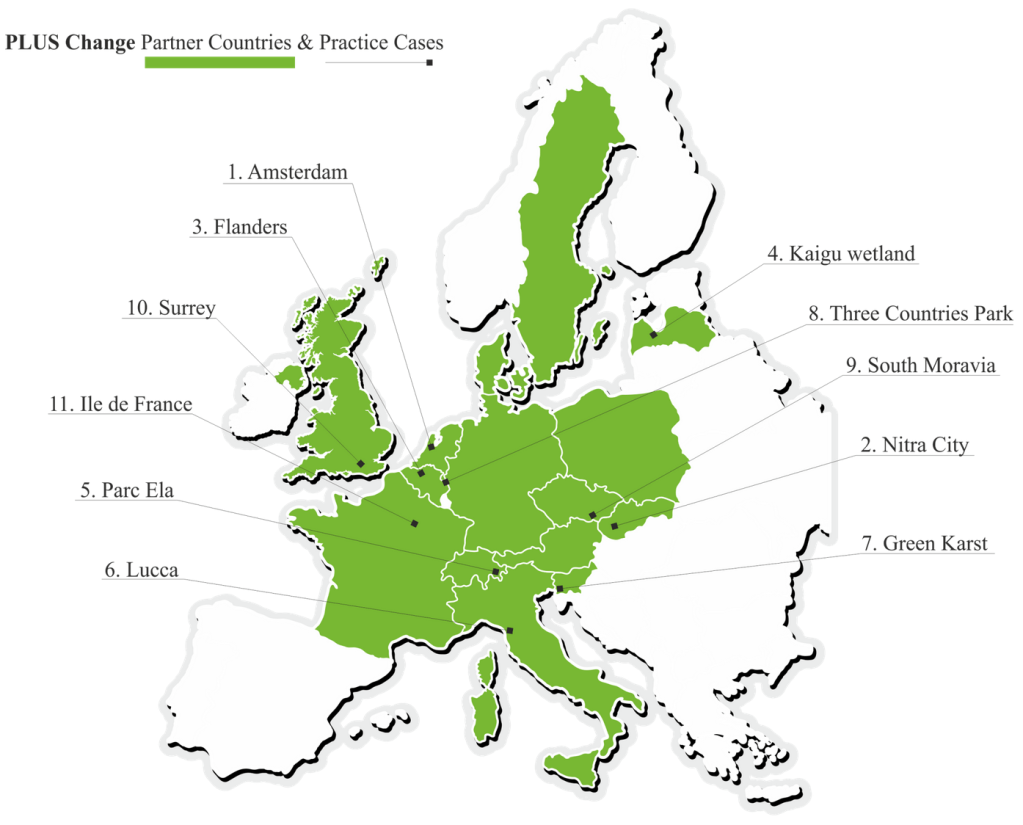
Governance systems are facing challenges to foster land-use strategies that support climate protection, social well-being and biodiversity conservation. The new EU-funded project “PLUS Change” involves 23 partner organizations across the European Union to provide robust evidence on and improve land-use decision-making for addressing climate change and biodiversity conservation. PLUS Change is co-ordinated by the Czech Globe research institute (see here for their introduction to the project). Using a transdisciplinary research approach, the project consortium is working with 11 planning authorities and regional development agencies in twelve case regions to firmly ground our research in the realities of different geographical, historical, cultural and political contexts and hence to produce policy-relevant knowledge on governing land-use towards sustainability.

To do so, the project will (1) bridge across biodiversity and climate, recognising them as problems that share many of the same underlying drivers, and must be solved together; (2) bridge between individual behaviour changes of citizens and broader systems-wide changes in decision-making and policy at levels from local to national to EU; and (3) bridge between different areas of expertise to create a truly transdisciplinary project that includes social sciences, land use modelers and practitioners of land use planning.

The scientific partners in PLUS Change will work on land-use modelling, produce a planning toolkit and test participatory methods in the case regions.

Our research group will use meta-analytical tools to synthesize evidence on how governance and policy impact sustainable land-use change. We aim to identify what governance approaches and interventions (evidence-based? participatory? collaborative? scale-adapted? etc.) have worked in what contexts to achieve a more sustainable land-use. Building on these results, in-depth empirical research (interviews, document analysis) will be conducted in 12 local practice cases in various countries across Europe. We will develop a rich understanding of the historical development of land use, contentious land use issues and conflicts, and the role of policy, tenure and governance arrangements in shaping land use change.

Interested to join the Leuphana PLUS Change team as a PhD researcher? Shortly, we will advertise an open position at https://www.leuphana.de/en/university/open-positions/research-teaching.html.

Introducing ParticipationCaseScout – a tool to explore 305 coded cases of public environmental governance

By Jens Newig and Michael Rose

We are proud and happy to announce the launch of ParticipationCaseScout: a new web-based tool to explore and analyse a database of public environmental decision processes, with a focus on participatory and collaborative governance in Western democratic states (project ‘EDGE’).

With the goal of integrating and cumulating fragmented case-based knowledge, ‘EDGE’ has produced a database of 305 coded cases of public environmental governance, mainly to test the relationship between different forms of participatory and collaborative decision-making and environmental outcomes (for results, see e.g. Jager et al. 2020 and Newig et al. 2019). Funded by the European Research Council (ERC), ‘EDGE’ was led by Jens Newig, with Ed Challies, Nicolas Jager and Elisa Kochskämper as collaborators. The map below shows all locations of ‘EDGE’ cases.

To facilitate knowledge transfer, we developed the idea for ParticipationCaseScout in two undergraduate research seminars at Leuphana University Lüneburg in 2019 and 2020. When students were conducting expert interviews, they learned that professionals in public administration and consulting would appreciate a web-based tool that allows them to browse case studies in settings similar to their own work.

After two years of work, ParticipationCaseScout (available in English and German) not only serves to browse, explore and compare existing case studies (with many options for searching and filtering). It also allows to calculate governance-related ‘success’ factors for achieving desired environmental or social outcomes via specifically tailored regression analyses.

We are grateful to our many collaborators: our student assistants, Marlene Rimmert, Anita Vollmer, Inga Melchior and Lana Wesemann; the participants of the two undergraduate seminars; the many experts in public administration and consulting who commented on earlier versions of ParticipationCaseScout and to Mathias Jesussek from DataTab for technical implementation of the interactive tool.

We hope that ParticipationCaseScout will inspire practitioners in the evidence-informed design of participatory decision-making processes, and provide researchers an easy access to a cumulative knowledge base for further comparative inquiry – qualitative and quantitative.

Knowledge Cumulation in Environmental Governance Research: Call for Contributions

By Jens Newig and Michael Rose

For an Innovative Session on 9 September 2021 at the upcoming Earth System Governance Conference (Bratislava / vitual, 7-10 September), we are looking for junior and senior scholars who would like to give short inputs of 5-7 minutes on different aspects of knowledge cumulation in earth system governance research. Inputs may cover topics such as

  • epistemic prerequisites and limits of knowledge cumulation;
  • methods of knowledge cumulation;
  • experiences and best practice examples of knowledge cumulation;
  • policy makers’ perspectives on knowledge cumulation as evidence production;
  • open science for knowledge cumulation;
  • forward-looking perspectives of how to improve knowledge cumulation.

The virtual innovative session will take place on September 9 from 10.30 to 12.00 Central European Time. If you are interested to contribute a short presentation, please send us your abstract (around 250 words) by July 25 (e-mail to newig@uni.leuphana.de and rose@uni.leuphana.de). We will inform you about acceptance in early August.

The innovative session seeks to bring together researchers from the ESG community – and the wider field of environmental governance – who share a common interest in the debate on knowledge cumulation, its prospects, opportunities, current diagnoses, limits and pitfalls, as well as in building institutions that facilitate a more “cumulative research culture” without compromising epistemic diversity.

While this session is linked to an emerging ESG Task Force on Knowledge Cumulation, everyone is invited to participate regardless of your interest in taking part in the Taskforce. (The Taskforce will be launched at the ESG Conference on September 10, at 1.30 p.m. – virtual. Please et us know if you would like to join, independently of the Innovative Session.)

More details on the Innovative Session can be found in this document.

We look forward to receiving interesting proposals!

Assessing ‘success’ of environmental governance: How to define effectiveness, legitimacy and justice?

By Jens Newig and Ed Challies

In various projects, we come across the challenge of assessing the ‘success’ of environmental policy and governance. Regularly, we find three main aspects mentioned: effectiveness, legitimacy, and justice (alongside other, mostly related factors such as efficiency, equity, transparency, and accountability). But how can we succinctly define these evaluative criteria? Here’s our attempt, which we have already applied in one project (GOVERNECT). Our definitions are inspired by works of Adger et al. (2003); Fung (2006), and Hogl et al. (2012).

Figure 1: (At least) three dimensions of environmental governance ‘success’?

Environmental effectiveness: Strictly speaking, effectiveness of policy/governance refers to the extent to which a given goal is reached. More specifically, environmental effectiveness refers to the extent to which a policy is likely to achieve environmental improvements in the sense of sustainable use of resources, protection of ecosystems and human health, and prevention of environmental degradation. Aspects of efficiency, delivery, implementation, goal attainment, or improving environmental conditions may all contribute to effectiveness.

Legitimacy: Justified authority. Key questions are: a) Is the policy/governance instrument (likely to be) accepted by the constituency and/or addressees? b) Has it been produced through a fair, transparent process, involving the relevant stakeholder groups and affected parties (procedural fairness) – or is there an imbalanced representation of actor groups and ‘illegitimate’ influence? Legitimacy is culturally specific and may, but need not, be linked to democracy. Note that output-oriented legitimacy is often closely related to (environmental) effectiveness in the sense that a policy may be seen as legitimate if it delivers intended outcomes.

Justice: Environmental justice as a principle embodies the idea that no person or group is systematically deprived or disadvantaged in the distribution of protection from environmental and health risks,  or the enjoyment of environmental quality. Furthermore, environmental justice relates to whether people are given due recognition and treated fairly in public environmental decision-making (an aspect which overlaps with legitimacy). Key questions are: Is the policy/governance instrument likely to create/exacerbate or reduce inequalities or inequity among stakeholders / affected populations – e.g. through spatially or temporally uneven impacts of environmental change, access to resources, or other consequences of the policy/governance instrument?

So, the ‘success’ (or lack thereof) of environmental governance processes may be seen as a three-dimensional concept. There may of course be trade-offs between these dimensions. For example, a process that delivers a high level of environmental protection may be considered a failure by stakeholders who attach a lot of importance to justice, if that process was less than fair. Others, who weigh environmental effectiveness relatively highly, may consider it a success.

To complicate things further, these three dimensions or criteria are not independent, but rather overlapping and related (as mentioned above), so they interconnect in a way that is more complex than depicted in Figure 1. Our contention, though, is that it may be more fruitful to assess environmental governance processes according to these criteria, than to pursue any single definition of ‘success’ for the evaluation of governance processes.

We’d be happy for any comments or discussion on these definitional attempts!

Cited literature

Adger, W.N., K. Brown, J. Fairbrass, A. Jordan, J. Paavola, S. Rosendo and G. Seyfang (2003) ‘Governance for sustainability: Towards a ‘thick’ analysis of environmental decisionmaking.’ Environment and Planning A 35 (6): 1095-110.

Fung, A. (2006) ‘Varieties of Participation in Complex Governance.’ Public Administration Review 66 (Special Issue): 66-75.

Hogl, K., E. Kvarda, R. Nordbeck and M. Pregernig (2012) Legitimacy and effectiveness of environmental governance – concepts and perspectives, in Environmental Governance. The Challenge of Legitimacy and Effectiveness, eds. K. Hogl, E. Kvarda, R. Nordbeck and M. Pregernig. Cheltenham: Edward Elgar: 1-26.