Michael Rose

Michael Rose has been affiliated as senior researcher and lecturer with the research group on governance, participation and sustainability since December 2018. In November 2025, he moved to the Center for the Study of Democracy at Leuphana University Lüneburg to research, coordinate and teach in the Key Subject Area “Democratic Resilience: Democracy’s Sustainability in the Global Polycrisis Era.” In the winter term 2024/25, he was an administrative professor (interim professor) for governance and sustainability at Leuphana University Lüneburg. He holds a Dr. phil. (equivalent to PhD) from the University of Düsseldorf and a diploma (equivalent to master’s degree) from the University of Bamberg, both in political science. Michael is associate editor of the Journal of Environmental Policy & Planning and co-convener of the Earth System Governance Taskforce on Knowledge Cumulation.

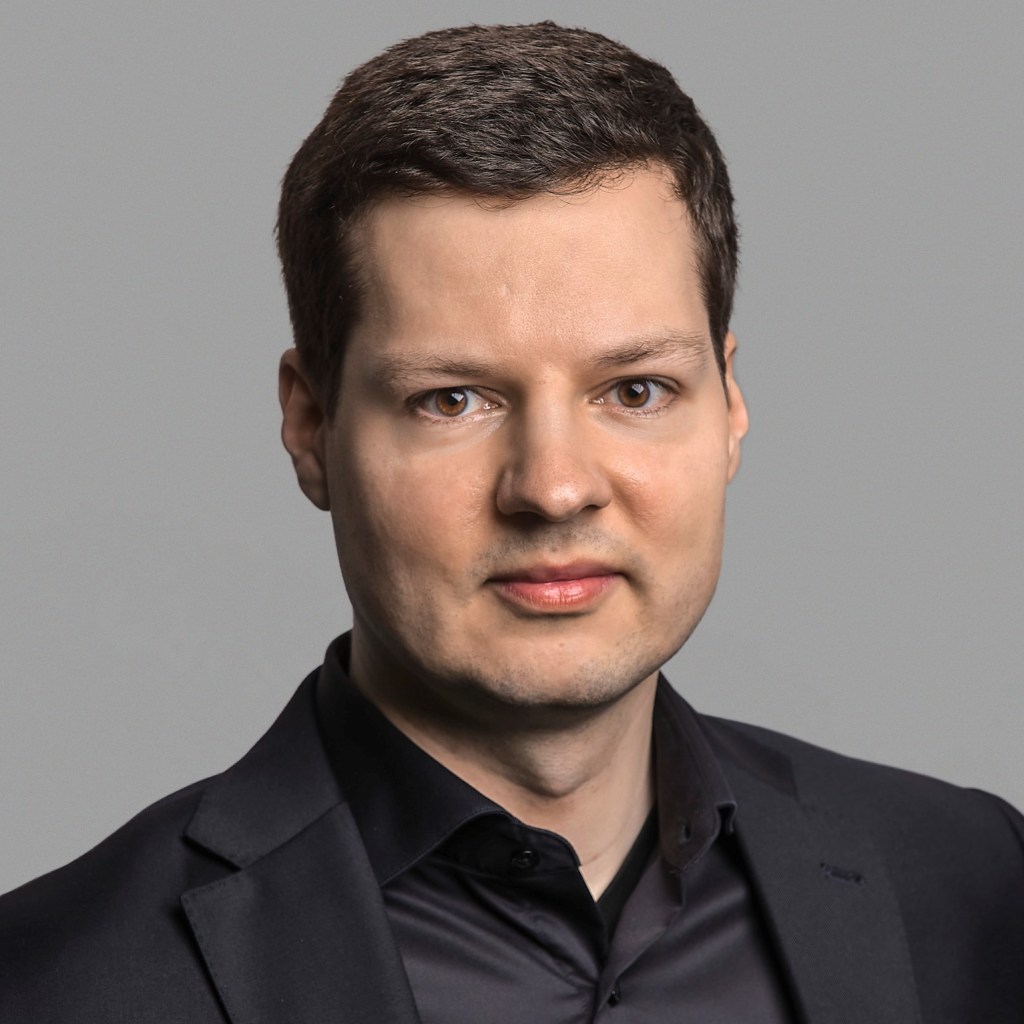
Picture: (c)Brinkhoff-Mögenburg/Leuphana

Before joining Leuphana University, he worked as a researcher and scientific coordinator of the Center for Transformation Research and Sustainability (transzent) at the University of Wuppertal. Adopting a broad political science perspective, Michael’s research focusses on the political aspects of sustainable development and the sustainability aspects of politics. The question of how the interests of future generations can be institutionally considered in present-day democracy both in theory and in practice has driven his research since his doctoral thesis on proxy representation. Since his work at transzent in Wuppertal, he also engages with inter- and transdisciplinary sustainability science, in particular comparative research on real-world laboratories. At Leuphana, these research strands are complemented with research on national sustainability institutions and the sustainability state, participatory sustainability governance, and knowledge cumulation in environmental governance research.

Visit Michael’s profiles on academia.edu | leuphana.de | LinkedIn | ORCID | ResearchGate

Vita

Since 2025: Post-doctoral researcher, coordinator and lecturer with the Key Subject Area “Democratic Resilience: Democracy’s Sustainability in the Global Polycrisis Era” at the Center for the Study of Democracy (CSD/ZDEMO) and the Institute of Political Science (IPW), Leuphana University Lüneburg

2024 – 2025: Administrative Professor (Professurverwaltung) for Governance and Sustainability, Leuphana University Lüneburg

2018 – 2025: Post-Doctoral Research Associate, Research Group Governance, Participation and Sustainability, Institute of Sustainability Governance (INSUGO), School of Sustainability, Leuphana University Lüneburg

2015 – 2018: Research Associate, Center for Transformation Research and Sustainability (TransZent), University of Wuppertal

  • 2016 – 2018: Scientific Coordinator, TransZent head office
  • 2015 – 2018: Researcher, BMBF research project “Well-Being Transformation Wuppertal (WTW) – an Urban Transition Laboratory for Sustainable Economics”

2016 – 2017: Adjunct Lecturer, Chair of Political Science II, Heinrich Heine University of Düsseldorf

2012 – 2015: Doctoral Research Fellow (scholarship), interdisciplinary post graduate programme “Linkage in Democracy” (LinkDe), Institute of Social Sciences, Heinrich Heine University of Düsseldorf, Dr. phil. (equivalent to PhD in political science, 12/2016)

2009: Intern, research area Peace and Sustainable Development, Protestant Institute for Interdisciplinary Research (FEST), Heidelberg

2005 – 2012: Student of Political Science, including Public Administration, International Relations, and Philosophy, Otto Friedrich University of Bamberg, Dipl.-Pol. Univ. (equivalent to master’s degree in political science, 02/2012)

Publications

2025

Rose, M., Newig, J., & Leipold, S. (2025). Knowledge cumulation in environmental governance research. Environmental Policy and Governance.

Rose, M., Newig, J., & Jager, Nicolas W. (2025). Does participatory governance help address long-term environmental problems? Conceptualization and evidence from 23 democracies. Policy Studies, 1-25. [free open access content]

Newig, J., & Rose, M. (2025). How to Assess Knowledge Cumulation in Environmental Governance Research? Conceptual and Empirical Explorations. Environmental Policy and Governance 35 (4), 662-681. [free open access content]

Rose, M. (2025). From the environmental state to the sustainability state? Conceptualization, indicators, and examples. Sustainability: Science, Practice and Policy, 21(1), Article 2463188 (16 pages). [free open access content]

2024

Rose, M. (2024). Can We Represent Future Generations in Myopic Democracies? – Analyzing the Design, Feasibility and Viability of Institutional Guardians of Future Generations. Policy Studies, 1-21. [free open access content]

Newig, J., & Rose, M. (2024). Assessing Knowledge Cumulation in Earth System Governance Research: Codebook and Aggregation Rules. SSRN Social Science Research Network. https://doi.org/10.2139/ssrn.4850113. [free open access content]

Newig, J., Rose, M., & Melchior, I. C. (2024). How to identify published articles originating from paper presentations at academic conferences of the Earth System Governance Research Community: Screening and matching guideline. SSRN Social Science Research Network. https://doi.org/10.2139/ssrn.4850108. [free open access content]

Rose, M. (2024). Zukunftgerecht handeln in Kommunen. In: Kompetenzzentrum Technik-Diversity-Chancengleichheit e.V. (Ed.), Alle Generationen im Blick. Neues aus der Zukunftswerkstatt Kommunen, Vol. 3. Bielefeld, pp. 8-10. [free open access content]

Rose, M. (2024). Institutional Proxy Representatives of Future Generations: A Comparative Analysis of Types and Design Features. Politics and Governance, 12, Article 7745 (21 pages). [free open access content]

Rose, M., & Newig, J. (2024). Umwelt-Governance und Partizipation. In: Sonnberger, M., Bleicher, A., Groß, M. (Eds.), Handbuch Umweltsoziologie. (pp 759–774). Wiesbaden: Springer VS.

2023

Rose, M. (2023): Stellungnahme zur öffentlichen Anhörung im Parlamentarischen Beirat für nachhaltige Entwicklung im Deutschen Bundestag zum Thema “Weiterentwicklung des Parlamentarischen Beirats für nachhaltige Entwicklung“. Deutscher Bundestag, Ausschussdrucksache 20(26)63. [free open access content]

Rose, M., Gathen, L., & Ehmke, W. (Hrsg.) (2023). Nachhaltige Lebensqualität im Landkreis Lüchow-Dannenberg. Wissenschaftlicher Projektbericht im Modul “Forschungsprojekt in der Nachhaltigkeitswissenschaft”, Leuphana Bachelor, Sommersemester 2023. Lüneburg: Leuphana Universität. [free open access content]

Rose, M., & Newig, J. (2023). Umwelt-Governance und Partizipation. In: Sonnberger, M., Bleicher, A., Groß, M. (eds) Handbuch Umweltsoziologie. Springer VS, Wiesbaden. https://doi.org/10.1007/978-3-658-37222-4_33-1

Newig, J., Rose, M., Aksoy, Z., Beaudoin, S., Bolognesi, T., Fritsch, O., Hegger, D. L., Hofmann, B., Jager, N., Kellner, E., Leipold, S., Persson, Å., Runhaar, H. A., & Webb, B. (2023). To Assess Progress in the Social Sciences, We Should Study Knowledge Cumulation, not Disruptiveness. Social Science Research Network. [free open access content]

2022

Mathis, O. L., Rose, M., Newig, J., & Bauer, S. (2022). Toward the sustainability state? Conceptualizing national sustainability institutions and their impact on policy-making. Environmental Policy and Governance, 1– 12. [free open access content]

Newig, J., & Rose, M. (2022): ParticipationCaseScout. Online Tool. [free open access content]

2021

Hilger, A., Rose, M., & Keil, A. (2021). Beyond practitioner and researcher: 15 roles adopted by actors in transdisciplinary and transformative research processes. Sustainability Science 16(6), 2049-2068. [free open access content]

Rose, M. (2021). Proxy-Repräsentation: Die institutionelle politische Repräsentation der Stimmlosen am Beispiel zukünftiger Generationen. In: Neubauer, Marvin; Stange, Max; Resske, Charlott; Doktor, Frederik (Hrsg.): Im Namen des Volkes: Zur Kritik politischer Repräsentation. Tübingen: Mohr Siebeck, S. 275-302, ISBN: 978-3-16-158219- 6.

Rose, M., & Schleicher, K. (2021). Transformative Indikatoren: Zielorientierung und Wirkungsabschätzung in Reallaboren. In: Gemeinhardt, Alexander; Lehmann, Karen (Hrsg.): Wege transformativer Forschung: Zielorientierung und Indikatoren. Darmstadt: Schader-Stiftung, S. 53-63 [free open access content].

2020

Rose, M., & Hoffmann, J.M. (2020). Seven Building Blocks for an Intergenerationally Just Democracy. FREG Position Paper. Stuttgart: Foundation for the Rights of Future Generations. [free open access content]

Rose, M., & Maibaum, K. (2020). Meeting the challenge of (co)designing real-world laboratories: Insights from the Well-Being Transformation Wuppertal project. GAIAEcological Perspectives for Science and Society, 29(3), 154-160. [free open access content]

Newig, J., & Rose, M. (2020). Cumulating evidence in environmental governance, policy and planning research: towards a research reform agenda. Journal of Environmental Policy & Planning, 22(5), 667-681. [free open access content]

2019

Rose, M. (2019). Non-identity – So what? A political scientist’s perspective on a curious but somehow arbitrary problem. Intergenerational Justice Review, 5(2), 54-55. [free open access content]

Rose, M., & Hoffmann, J.M. (2019). Editorial. Issue topic: ‘The scope of the non-identity problem’. Intergenerational Justice Review, 5(2), 47. [free open access content]

Rose, M., Wanner, M.,& Hilger, A. (2019): Das Reallabor als Forschungsprozess und Infrastruktur für nachhaltige Entwicklung: Konzepte, Herausforderungen und Empfehlungen. 2. aktualisierte und erweiterte Auflage. Wupperal Paper 196. Wuppertal: Wuppertal Institut für Klima, Umwelt, Energie gGmbH (38 pages). [free open access content]

Rose, M. (2019): All-Affected, Non-Identity and the Political Representation of Future Generations – Linking Intergenerational Justice with Democracy, in: Thomas Cottier, Shaheeza Lalani & Clarence Siziba (eds.): Intergenerational Equity: Environmental and Cultural Concerns. Leiden, Boston: Brill Nijhoff, pp. 32-51, ISBN: 978-90-04-38800-0.

2018

Rose, M., Wanner, M., & Hilger, A. (2018): Das Reallabor als Forschungsprozess und -infrastruktur für nachhaltige Entwicklung: Konzepte, Herausforderungen und Empfehlungen. 1. Auflage. NaWiKo Synthese Working Paper No. 1 (36 pages). [free open access content].

Hilger, A., Rose, M., & Wanner, M. (2018): Changing Faces – Factors Influencing the Roles of Researchers in Real-World Laboratories. In: GAiA – Ecological Perspectives for Science and Society 27(1), pp. 138-145, doi: 10.14512/gaia.27.1.9. [free open access content]

Wanner, M., Hilger, A., Westerkowski, J., Rose, M., Stelzer, F.,& Schäpke, N. (2018): Towards a Cyclical Concept of Real-World Laboratories: A Transdisciplinary Research Practice for Sustainability Transitions. In: disP – The Planning Review 54(2), pp. 94-114, doi: 10.1080/02513625.2018.1487651.

Rose, M. (2018 [2017]): Zukünftige Generationen in der heutigen Demokratie – Theorie und Praxis der Proxy-Repräsentation. Wiesbaden: Springer VS (582 pages), ISBN: 978-3-658-18846-7. Reviewed in Intergenerational Justice Review 1/2018, pp. 51-53, doi: 10.24357/igjr.12.1.648.

2017

Rose, M., Schleicher, K., & Maibaum, K. (2017): Transforming Well-Being in Wuppertal: Conditions and Constraints. In: Sustainability 9(12), 2375 (27 pages), doi: 10.3390/su9122375. [free open access content]

Rose, M., & Schleicher, K. (2017): Was tragen die Wuppertaler Reallabore zur Wohlstandstransformation bei? Ein Leitfaden für einfache Wirkungsabschätzungen in transdisziplinären Projekten. Wuppertal: Zentrum für Transformationsforschung und Nachhaltigkeit (TransZent) (13 pages). [free open access content]

2016

Rose, M. (2016): Constitutions, Democratic Self-Determination and the Institutional Empowerment of Future Generations – Mitigating an Aporia. In: Intergenerational Justice Review 2(2), pp. 56-71, doi: 10.24357/igjr.2.2.715 (winning article (3rd rank) Intergenerational Justice Prize 2015/16). [free open access content]